

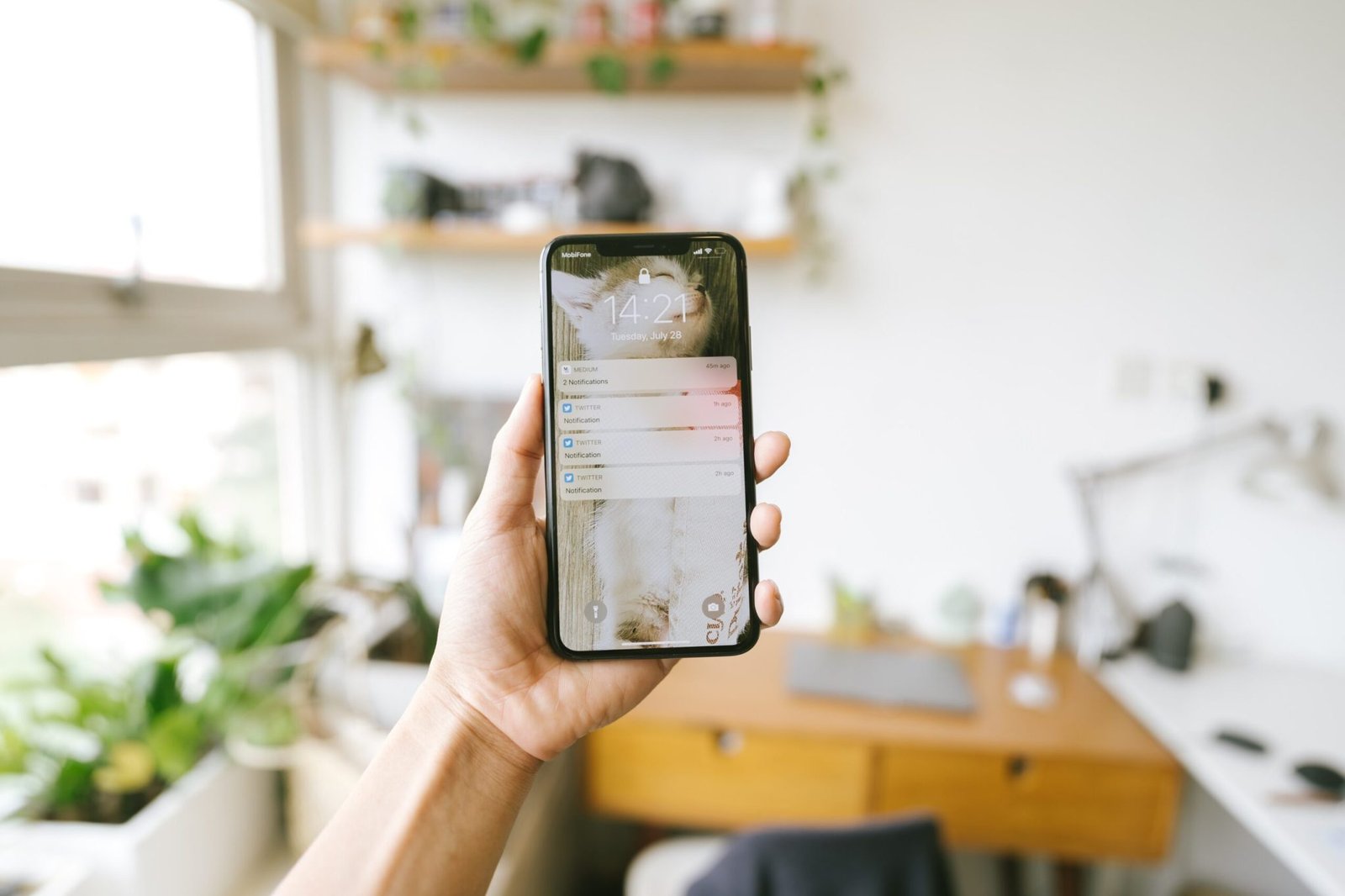
Very recently, I wrote an article on how we live absorbed by our screens, and how we have unconsciously developed an unhealthy relationship of dependency with our devices. This comes at the high price of our time, attention, energy, and a distortion of our self-image as well as how we perceive and value the world around us.
If you’re interested, you can go and read the full article here.
After realizing that I am not comfortable nor content with the relationship I have with my phone myself, I decided that I wanted to do something about it. So I dug into the different ways that I could configure my smartphone in order for it to work for me, instead of against me.
As a result, I have put together an easy-to-follow 5 step action plan with the sole purpose of bettering my screen and phone usage, in order to create more space between me and this device and replace it with other things in life that have true value for me.
If you were one of the 38 million people who watched Netflix’s Social Dilemma then you won’t be surprised by the fact that smartphones and apps are designed with the sole purpose of grabbing our attention, so that we keep coming back to them. Without our frequent activity and endless scrolling, their business model wouldn’t prosper. Therefore, they’re specifically designed to suck you in and get you hooked, which is why so many people have trouble reducing their phone usage and detoxing from their devices – even if they willingly want to.
What happens is that our phones have been designed to stimulate the reward center of our brain. So when we get messages and notifications our brain feels something very similar to when you hit the jackpot at the casino. In fact, phones have the same bright, flashy elements that slot machines do, and provide us with the same dopamine hit, which is exactly what encourages us to keep on playing.
However, by reconfiguring some of the default settings and functionalities, you can manage to reduce its addictive impact which creates that energy-sucking relationship of dependency.
So if you also want to take back control of your time, attention, and energy in your life, I invite you to start by checking out these 5 action steps that will help you be more focused, have fewer distractions, and ultimately, make more space to engage with higher-value activities and people in your life.
1. Reduce low-value apps on your phone to a minimum.
The first step to avoiding wasting time on your phone aimlessly should be getting rid of any apps that are not serving you. Identify the apps that are just taking up space in your phone without delivering any real benefits.
The criteria by which you go about this app decluttering process can be slightly tricky because it’s not just about eliminating the apps you don’t use that much, but also about those which, despite keeping you highly active and engaged, result in misplacement of your time and are detrimental to your well-being.
Before entering the new year I went through a personal decluttering exercise, in order to get rid of anything that no longer served me and make room for what does this 2021.
If you want to go through that decluttering exercise yourself, you can read more about it here and join the #reset2021 challenge.
One of the apps I identified to be draining my energy and time was Whatsapp. Messages kept piling up and replying to them always felt more like a chore than something that I took pleasure in doing. In fact, I think most of us are under the false impression that by having an instant messaging app like Whatsapp at the tip of our fingers, we are obliged to be responsive at all times.
That philosophy comes at a cost of frequent intrusion of our personal space, in which communication boundaries tend to disappear unless we decide to establish some limits ourselves.
Feeling the need to be continuously connected and reachable is exhausting. If something is really urgent, if someone really needs to reach you, there is a wonderful function that our phones have (although some of us seem to have forgotten) which is calling.
Ever since I got rid of Whatsapp I’ve been doing more calling and less texting. Although texting can be a really useful, effective, and clear way of communicating, it doesn’t strengthen bonds and connections like voice communication does. And if I’m honest, ever since I got rid of Whatsapp, I haven’t missed it one single bit.
So if you find yourself in a similar situation with any of your apps, and you feel that it’s more of a distraction and energy drainer rather than useful, don’t hesitate to just trash it.
Moving on without it for a couple of months will be the best way of knowing and confirming if you were getting any real value out of it or not. In my case, it turns out I didn’t. Now I have one less thing to worry about.
That actually takes me to my second suggestion, which is to experiment with getting rid of different apps and see how big is the urge to re-install them again.
2. Uninstall the most addictive apps daily or configure app time-limits.
Cutting the addiction from the root is not only the most effective way to get rid of it all together but also helps you become more aware of your level of dependency.
Just to give you an example, in my phone’s Screen Time Activity, Instagram is always at the top of the list, with an average of an hour of daily activity. Therefore, this was the app that I felt I needed to address first.
In order to reduce the time I spend on the app, I have configured a time-limit on my phone. This is an easy way to decide how you want to allocate your time, and you can configure it for any app that you would like to reduce your usage on.
Just go to Settings >> Screen Time >> App Limits >> And set a specific time-limit for the apps that you want.
In addition, I have also started to directly uninstall Instagram some days, which prevents me from scrolling aimlessly or checking the app during the day. You can’t waste time on things that you don’t have, right? Then in the evening, when I get some downtime, I download it back and have a little peek or publish some content.
As someone who does digital content creation for a living, I feel it would be quite hypocritical of me not to acknowledge the many benefits that Instagram provides not only as a distribution channel but also as an educational one. Instagram can be a great source of inspiration from which you can gain knowledge, learn about trends, or discover new tips and tricks to experiment with, while also allowing you to connect with interesting people who otherwise would be impossible to reach, and therefore, creating a rich network with those who have interests alike. On a personal level, I highly enjoy using it as a curated digital photo album and time-machine where I collect hand-picked moments and memories, as well as an easy way to follow-up on what my friends are up to.
However, on the other side of the spectrum, there’s a darker side to it. In 2017, the Royal Society for Public Health rated Instagram as the worst social media in terms of promoting anxiety and depression in teens and young adults.
That doesn’t come as a surprise, since it creates unrealistic expectations, continuous subconscious comparisons, FOMO, and addictive and endless scrolling that prevents us from focusing or getting restful sleep, just to mention a few.
So then, why are we still sucked in? And why do we have no intention of cutting it off?
There are various factors that make us feel like giving up this and other social networks (such as Facebook, Twitter, TikTok…) is a challenging and drastic decision to make, but Fear Of Missing Out (also known as FOMO) would certainly be at the top of the list.
Getting rid of these social platforms means not being able to access an immense online world in which people keep on living, interacting, and influencing others – and therefore, we are afraid that if we shut down that door, we won’t be able to keep up with the activities and status of our social circles. In the end, FOMO is nothing more than an apprehension of being absent from the rewarding experiences that others might be having, which results in wanting to stay continuously connected with what others are doing, and therefore, leads to compulsive and intensive social media use.
If we’re not ready to opt-out of that world, if we don’t want to shut that door completely, then we should at least be aware of the way it impacts us and set some healthier boundaries in order to protect ourselves from its negative effects.
Instagram just turns out to be my personal Achilles heel, but yours could be Twitter, Candy Crush, LinkedIn, or whichever other app keeps you hooked more time than you would like.
By uninstalling the app daily, you’ll be creating more space between you and whatever is causing the addictive behavior, as well as rethinking the type of relationship you have with your phone and certain apps that highjack your focus.
3. Turn off notifications.
If our goal is to reduce our screen time and spend more time away from our phones, notifications are our biggest enemies. Their aim is to re-engage us by saying ‘Hey, come back here, I’ve got something you’re gonna want to see’.
In fact, I don’t know about you, but one of the things that I find most annoying about this device is how it undermines my ability to focus, by being a source of continuous distractions. Instead of being us who control the experience with our phones, it seems to be them who have the power to grab our attention whenever and wherever they want.
Therefore, one of the most effective things you can do to regain control over your attention-seeking device is to turn off nearly all notifications. This will help you to decide for yourself when, where, and how, you want to use your phone, instead of the other way around, as well as improving your productivity levels. Sometimes it’s so hard to get in the flow, that the last thing you want is a distraction dragging you out of it against your will.
In order to turn off your notifications, go to Settings >> Notifications >> And go app by app turning off any notifications which are not essential.
In my case, I have disabled Instagram notifications which I find the most annoying (I can’t think of worse and emptier notifications than Instagram likes, honestly), and a couple other social networks, but have kept the ones that I find helpful such as Maps, iMessage (where I only communicate with a few people these days), calendar appointments, and Screen Time, of course – to see how this little experiment is going.
4. Turn off your phone or schedule “downtime” periods.
How often do you turn off your phone? I’m not talking about letting it die because it has run out of battery, I mean how many times do you willingly turn it off and fully disconnect? I never do, and something tells me you don’t either.
Turn your phone off, put it in a drawer, and forget about it for the rest of the day. This will help your mind get used to the absence of your device and understand that it’s not meant to be a prolongation of your arm. Out of sight, out of mind. At least for a while…
Sundays are a great time to start experimenting with a “no phone” day and replace your usual screen time with something different like going for a walk, doing a puzzle, creating some art, or a nice read. (Nothing would make me happier than to watch us revert the battle that aimless scrolling has won over reading time – grab a good old book and ditch your phone just for a day!)
If just the thought of turning off your phone completely gives you the chills, then you can try configuring “downtime” periods on your phone, or in the last instance, going into “do not disturb” mode.
You can do this by going to Settings >> Screen Time >> Downtime.
And Settings >> Do Not Disturb.
This is a great way to limit distractions when you want to do focused work, disconnect and get better sleep.
5. Have a “phone-free” bedtime schedule.
Sleep is one of the things that is most compromised by the compulsive use of our phones. Not only because its addictive nature makes us delay our bedtime while we keep on scrolling, but also because the blue-light of its screen and flashy notifications can disrupt our sleep cycles once we’ve finally managed to put it away and close our eyes.
The few fixes that I have going on at the moment in order to prevent this, are the following:
I have my phone set to dark-mode: Due to the nature of my work, I spend long hours in front of a screen. Nowadays, I think most of us do. If +9 hours of blue light exposure weren’t enough, we go on adding more evening screen time and in some cases, even taking our phones to bed with us. If you have your phone on dark mode, this will help you reduce blue light, which is especially harmful at night because it reduces melatonin, a hormone that helps you sleep.
Night Shift Scheduled: Although your eyes will thank you for configuring your phone into the dark mode, it is still not enough if you are aiming for a good night’s rest. You should make a habit of eliminating high-stimuli activities that could disrupt your sleep by disconnecting from your electronic devices at least one hour prior to your bedtime. As shown in the screenshots above, I have my phone set up on “Do not Disturb” and “Downtime” modes an hour before I usually go to sleep, in order to prevent stimulation and sleep-interruptions that could come as a result of getting alerts or notifications. Now, I have swapped my bedtime scrolling with a good nighttime read, which is much more friendly for my rest and doesn’t delay my sleep time.
By reconfiguring your phone, you’ll be more focused, have fewer distractions, and better control over the use of your time. Once you become aware of the relationship with your phone and the areas of your life which are affected by it, you will be more motivated to change your behavior by being more present and making more space in your life for the things which hold true value. Hopefully, after putting these steps into action, it will be easier to have a healthier relationship with your phone and make your life a little bit more about the world out there rather than the world on your screen.
If you have a different take about the relationship you have with your device, feel free to share both the negative and positive impact that it brings into your life in the comments below and how you are ensuring a balanced use. We are all trying to find ways to achieve a better screen-life, so surely we can all learn something from it!