

Losing a loved one is devastating under any circumstances, but when that loss is caused by someone else’s negligence or wrongful conduct, the grief is compounded by a sense of injustice. In Pennsylvania, the surviving family members of a person who dies due to another party’s negligence have the legal right to pursue compensation through a wrongful death claim.
Understanding who is eligible to file, what types of compensation are available, and how wrongful death claims differ from survival actions is essential for families navigating this difficult process.
What Is a Wrongful Death Claim?
A wrongful death claim is a civil lawsuit brought by the surviving family members of a person whose death was caused by the negligent, reckless, or intentional conduct of another party. The purpose of a wrongful death claim is to compensate the surviving family members for the losses they have suffered as a result of the death.
Pennsylvania’s wrongful death statute is found at 42 Pa.C.S. § 8301. Under this law, a wrongful death action can be brought whenever the death of a person is caused by a wrongful act or neglect or unlawful violence or negligence of another, and the act would have entitled the injured person to maintain an action and recover damages if death had not resulted.
In practical terms, this means that if the deceased person would have had a valid personal injury claim had they survived, their family can pursue a wrongful death claim on their behalf.
Who Can File a Wrongful Death Claim in Pennsylvania
Pennsylvania law specifies who is eligible to bring a wrongful death action. Under 42 Pa.C.S. § 8301, the action must be brought by the personal representative of the deceased’s estate on behalf of the beneficiaries.
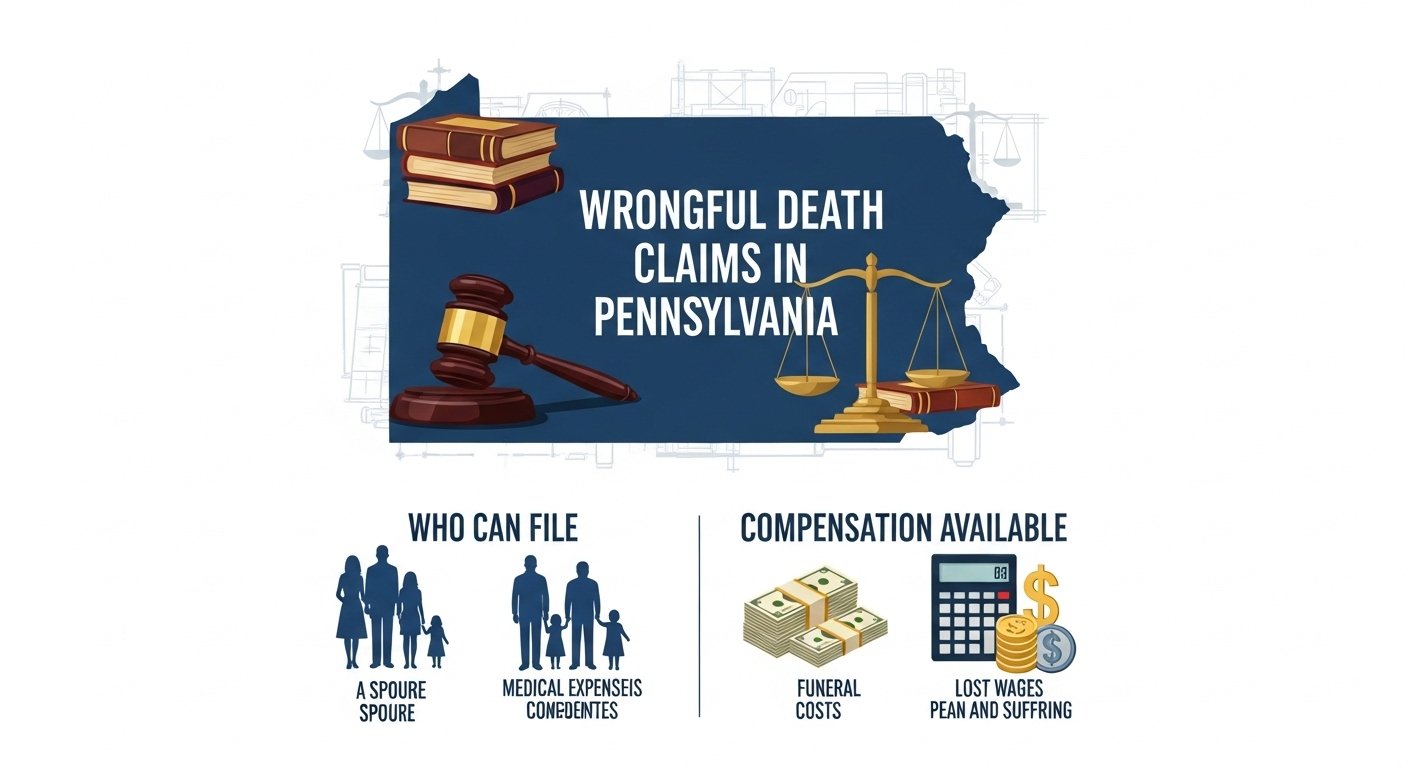
The beneficiaries who can receive compensation from a wrongful death claim include the surviving spouse, children of the deceased, and parents of the deceased if there is no surviving spouse or children. If there are no eligible beneficiaries in these categories, the right of recovery may not exist.
The personal representative is typically the executor or administrator of the deceased person’s estate, as named in the will or appointed by the court. If no estate has been opened, the family will need to initiate probate proceedings to appoint a representative before the wrongful death action can be filed.
Wrongful Death vs. Survival Action
Pennsylvania law provides two distinct types of claims when someone dies due to negligence: the wrongful death action and the survival action. These are separate causes of action with different purposes, different beneficiaries, and different categories of recoverable damages.
The wrongful death action compensates the surviving family members for their losses resulting from the death. The damages are focused on the impact of the death on the living family members.
The survival action, governed by 42 Pa.C.S. § 8302, is a continuation of any personal injury claim the deceased person would have been able to bring had they survived. The damages in a survival action belong to the deceased’s estate and are distributed according to the will or the laws of intestate succession.
In most wrongful death cases, both a wrongful death action and a survival action are filed simultaneously. The two claims are often litigated together but involve separate calculations of damages.
Damages Available in a Wrongful Death Claim
The damages recoverable in a Pennsylvania wrongful death action are designed to compensate the surviving family members for the tangible and intangible losses caused by the death. As personal injury lawyers in Easton, PA would explain, these damages typically include the following categories.
• Loss of earnings. The income the deceased would have earned over the remainder of their expected working life, including projected raises, promotions, and benefits.
• Loss of services. The value of household services, childcare, home maintenance, and other contributions the deceased provided to the family.
• Loss of companionship and guidance. The emotional and relational losses suffered by the spouse and children, including loss of parental guidance for minor children.
• Funeral and burial expenses. The reasonable costs associated with the funeral, burial or cremation, and related expenses.
• Medical expenses preceding death. If the deceased incurred medical costs between the injury and death, those expenses are recoverable.
Damages Available in a Survival Action
The survival action recovers damages that the deceased person themselves suffered before death. These damages belong to the estate rather than the family members directly.
• Pain and suffering. If the deceased experienced conscious pain and suffering between the time of injury and death, the estate can recover compensation for that suffering.
• Lost earnings before death. Any wages lost between the date of injury and the date of death.
• Medical expenses. The cost of medical treatment the deceased received between the injury and death.
The survival action is particularly important in cases where the deceased suffered for a period of time before passing, as it ensures that the pain and suffering they endured is compensated even though they are no longer alive to bring the claim themselves.
Common Causes of Wrongful Death
Wrongful death claims in Pennsylvania arise from many different types of incidents.
• Motor vehicle accidents. Car, truck, and motorcycle crashes caused by negligent driving, including drunk driving, distracted driving, and speeding.
• Medical malpractice. Surgical errors, misdiagnosis, medication mistakes, and other forms of healthcare negligence that result in patient death.
• Workplace accidents. Fatal injuries on construction sites, in manufacturing facilities, and in other hazardous work environments, often involving third-party liability.
• Defective products. Products with dangerous design defects, manufacturing flaws, or inadequate warnings that cause fatal injuries.
• Premises liability. Fatal slip and falls, drownings, elevator accidents, and other incidents caused by unsafe property conditions.
Statute of Limitations for Wrongful Death Claims
Under 42 Pa.C.S. § 5524(2), wrongful death claims in Pennsylvania must be filed within two years of the date of death. This is the same two-year limitations period that applies to personal injury claims generally, but the clock starts on the date of death rather than the date of the negligent act.
The survival action has the same two-year statute of limitations. Because the estate must be opened and a personal representative appointed before either action can be filed, families should begin the legal process as soon as possible to avoid running up against the deadline.
The Importance of Acting Promptly
Wrongful death cases require thorough investigation, expert analysis, and careful legal strategy. Evidence can be lost, witnesses’ memories can fade, and critical records can become more difficult to obtain as time passes. Beginning the process early ensures that evidence is preserved and that the family’s legal rights are fully protected.
While no amount of money can replace a loved one, Pennsylvania’s wrongful death and survival action statutes provide a legal framework for holding negligent parties accountable and securing financial stability for the families left behind. Understanding your rights under 42 Pa.C.S. § 8301 and § 8302 is the first step toward pursuing justice for your family.