

1. Ibiza: More than just a party island.
For many people, the first thing that comes to mind when they hear “Ibiza” is the wild nights of partying and excesses, or a scene that pretty much replicates Netflix’s lousy thriller “White Lines”.
Ibiza has been known as the ultimate clubbing paradise island for young (and not so young) tourists to get wasted, let loose, and party until they black out. So for some, the whole Ibiza experience just comes down to working on their tan by day and seeing some of the biggest DJ’s perform by night.
Which I can understand to some extent (I’m not going to sit here and pretend I haven’t had some of my most memorable nights at the club, am I?).
But there is a different (and better, if I may say) side to this island, and I am here to give it the exposure it deserves. Because Ibiza is so much more than just a party island. It is a great destination to switch off, lounge by the sea, read books, tune into the mediterranean laid-back lifestyle, and enjoy the ocean in its wonderful balearic warm climate. It’s actually one of my favourite places in the world. It feels like my second home, where I’ve made some of my best memories with a priceless group of people I can call family.
I’ve been lucky to spend my summers in Ibiza ever since I was a baby, since my mom’s life-long best friend is a born and raised islander there, and both of our families have been one since the beginning of their friendship. This has enabled me to experience the island from a completely different perspective, a local one, and learn about their very unique culture, food, traditions, as well as discovering the less massified and more tucked away spots.
I guess what I am trying to say is that you can go to Ibiza without setting foot in its clubs and still fall madly in love with it. So, with the close collaboration of my friend Marina, who is a native islander, I have created a series of blog posts, guides, and itineraries, with the sole purpose of sharing with you a more authentic and local Ibiza.
The one we love and hold so dear to our hearts, with the hopes that maybe, more people will start to change the perspective around this island and we can collectively encourage a more respectful and valuable tourism that doesn’t harm and sabotage the quality of locals’ lifestyle.
2. Dreamy beaches.
Let’s start with the obvious. Besides clubbing, the next thing Ibiza is most well-known for are its beautiful white sand beaches. So if you’re planning a vacay to Ibiza, you are surely looking forward to swimming in those crystal clear turquoise waters, snorkeling in isolated coves, or simply enjoying a good lay down at the soft sandy beach.
But here’s the thing with Ibiza’s beaches: The most popular ones such as Playa d’en Bossa, Las Salinas, Talamanca or Cala Bassa for example, have been over-constructed and infested with beach clubs over the years to boost the island’s tourism, so you’ll most likely have to fight for a parking spot and a patch of sand to put your towel down during high season (June, July & August). However, if you don’t mind putting up with the sounds of DJ beats and people trying to sell you fresh fruit or tickets to the clubs every five minutes, they’re actually really nice and good for a quick swim. But if some peace and calm is what you are looking for… don’t say I didn’t warn you.
The alternative? Plan your visit out of season, or to turn your explorer mode on and go on a search for the few peaceful unknown sand strips and hippie beaches that still remain (you’ll be surprised by how many hidden gems you can find off the beaten track).
You’ll most likely find more of those in the north, where beaches are less accessible and therefore, haven’t been so over-constructed as the south. The geological ground is also quite different on both opposite sides of the island, which is why you’ll find most sandy beaches down south, whereas the beaches up in the north are more rocky, and usually surrounded by cliffs and mountains.
Personally, I find Cala Comte to be one of the most beautiful beaches of the whole island (if not the most). It is considerably big compared to the smaller size of the rest of the beaches around the island, and it has gained huge popularity due to the unique beauty of its setting overlooking the islands of Sa Conillera or S’Illa des Bosc.
Most people usually go to the two sandy parts of Cala Comte beach, which stand to each side of the Sunset Ashram restaurant. However, during the summer months we try to avoid the big crowds, so we prefer to go to its smaller and rockier nudist corner to the left. Previously it was mostly frequented by locals, which called this part of the beach ‘Es racó d’en Xic’, but now you will most likely find it quite full any time after 10am, and has very ironically been renamed as ‘Cala Escondida’ (which means ‘the hidden beach’ – unfortunately, not so hidden anymore…). This little corner of the beach also has a small bar where you can enjoy some cold drinks and food.
Some other beaches that are worthwhile visiting in the south-west of the island are:
– Sa Caleta (Es Bol Nou), which is a little picturesque beach in the area of San Jose. If you get hungry at any point, book yourself a table at Restaurant Sa Caleta and treat yourself to an authentic and delicious paella.
– Es Cavallet (the nudist and less crowded alternative to the always busy Las Salinas)
– Cala Vadella and Cala D’Hort, if spectacular views is what you’re after. You will be overlooking the iconic island of Es Vedrà.
– Cala Salada & Cala Saladeta: Their beautiful surroundings and location between rocks, as well as the crystal clear waters make these two adjacent beaches an absolute feast for the eyes as well as a perfect snorkeling location. But if you want to be able to grab a parking spot during high season, make sure you arrive pretty early in the morning or you will be out of luck.
Although the beaches down south are the closest ones to us and therefore the ones that we visit more often, we always try to make time in our holidays for a day trip to the north. I would really recommend going up there on a day road-trip, and enjoy the drive through the alpine forests, mountains, greenery, cliffs and ocean views. Our favorite beach there is undoubtedly Benirras.
What I love most about this secluded little beach is that it is right in the middle of two big rugged cliffs, surrounded by nature and still remains quite authentic, with the small fishermen’s huts and boats untouched. Although the sand might not be as soft as the ones in the south, this beach offers an incredibly peaceful panorama with views to Es Cap Bernat, a big standing rock in the very center of its waters, which actually looks like a stone woman sitting on a throne.
If convenience is what you’re after, then I suggest going to Aigües Blanques or Cala San Vicente. This last one might not be so scenic, but it’s pretty long and wide and therefore, very family-friendly and ideal to go for a swim. It also has great restaurants where you can eat quality seafood and if you wander a little bit to the left and go up the rocky cliff, you’ll find a small secluded corner with fishermen’s huts where you can enjoy a little bit more privacy. The atmosphere is more relaxed and you can swim and snorkel quietly here.
3. Chasing the sunset (and most scenic views)
No matter where in the world, I am a sucker for golden hours and that incredible show of lights and colors that the sun puts on when it sets. In fact, Ibiza has gifted me some of the most insane and breath-taking sunsets I’ve ever seen. So trust me when I say that if you want first-class seats to the show, Ibiza’s south-west is the place to be.
However, while many tourists like to go to San Antonio’s sunset lounges such as Cafe del Mar or Cafe Mambo, let me suggest a slightly different experience.
If you like to get drunk to big pitchers of sangria and have loud house music blasting through the speakers as you watch the sun set behind the ocean among a big crowd of tourists then you’ll find those places enjoyable, but if you are looking for a little bit more magic, peace and intimacy, here’s what I suggest:
Es Vedrà lookout point:
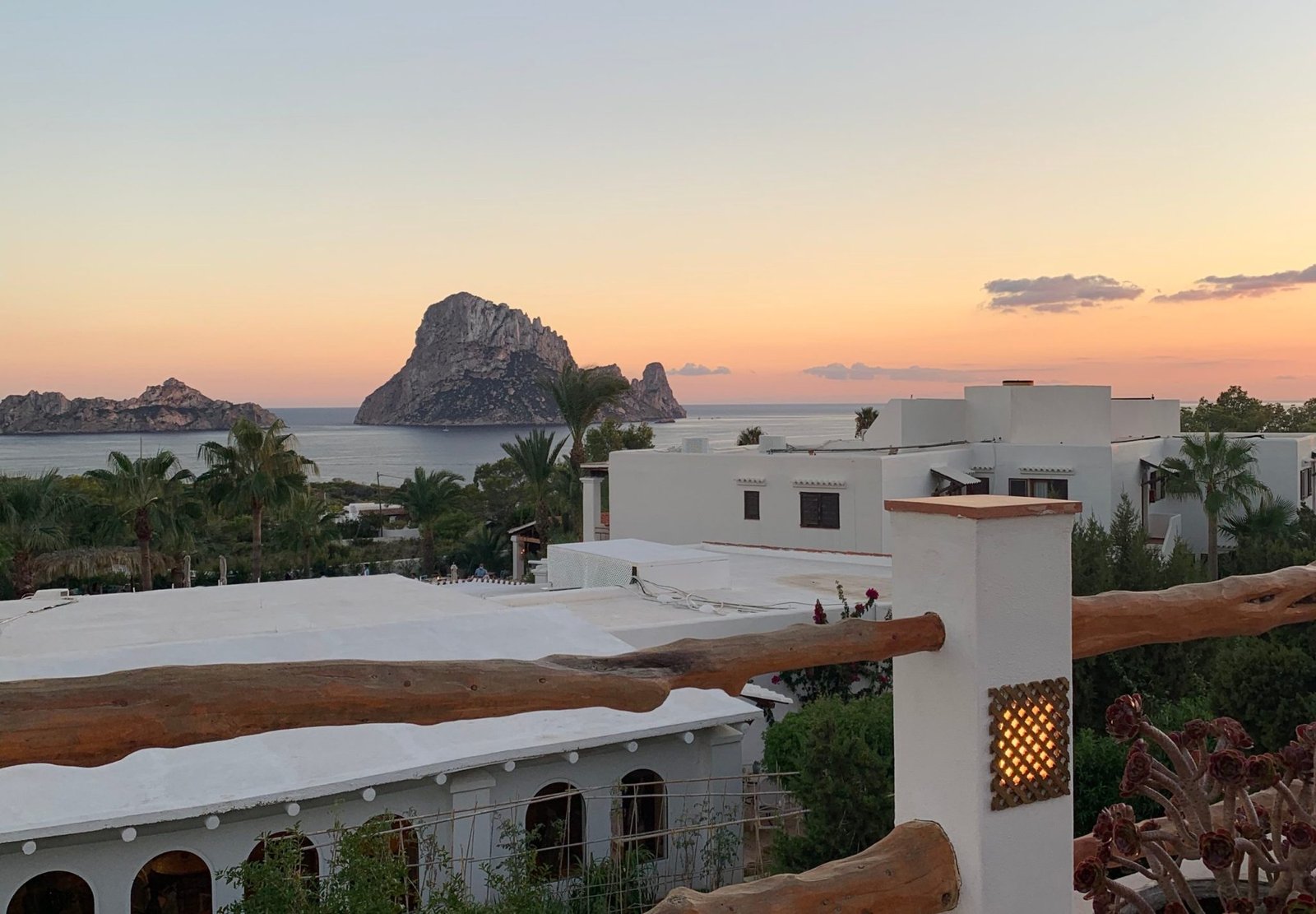
Rumour has it that the monolithic limestone rock formation of Es Vedrà is the third most magnetic point in the world. In fact, there are many myths and legends around this iconic island: some claim to have seen ships wreck or disappear, UFOs flying above it, or others swear to have heard siren’s calls. These might just sound like tall tales at first, but if you have the chance to witness the sun setting behind Es Vedrà, you’ll also feel there’s a unique sort of energy emanating from the rock. Grab a couple friends, some beers and a picnic, and get ready for one of the most magic sunsets of your life.
*Note: Most people who visit Es Vedrà’s viewing point go to the top lookout area, where there’s a watch tower from the XVIII century (Torre des Savinar). However, I would suggest you park up a little bit more down the road. You’ll be able to see an equally breathtaking sunset from both loactions, but you are likely to find less people on the middle lookout point (which is just a 30 min. walk down from the tower). You can get there by taking the road to San Jusep in direction to Es Cubells. Just before going down the road that takes you to Cala D’Hort, you’ll see a purple sign indicating the way to the tower. Simply follow it.
Puertas del Cielo lookout point (The Gates of Heaven):
Take the drive Cami Des Pla de Corona (Santa Agnes) to reach this scenic spot which has very rightfully earned its name. It’s located in an unparalleled scenic enclave, right on the edge of a cliff in the north of the island, which makes the views there feel like ‘the gates of heaven’ are just opening up in front of you.
Cala Comte:
I already mentioned Cala Comte as one of my favorite beaches to go for a swim, but did I mention it is also an outstanding location to watch the sunset? Although you’ll probably find significantly more people here than on the other previously mentioned spots, you can still find a nice private corner up in the rocks from where you’ll have a great lookout to the bay, the islands, and on a clear day, even Denia in the other side of the Spanish peninsula.
If you want to top up the experience with a luxury treat…
Club Petunia’s chill-out rooftop bar (only 10 min. away from San Jose) offers magical views to Es Vedrà. Sip on a cocktail or wine while you watch the sun set behind Ibiza’s most stunning island rock.
Hostal La Torre in the surrounding area of San Antonio also offers amazing views to the bay from its restaurant and terrace, along with a great vibe pumped by a live DJ and chill-out music.
Dalt Vila:
Dalt Vila is Ibiza’s fortified Old Town. In this UNESCO World Heritage site you can soak in some wonderful panoramic views, and a vast pot of history. Wandering along its narrow little alleys you will find surprises and amazing photo opportunities everywhere. I would strongly recommend going up there around sunset, not only because of the views, but also because you don’t want to find yourself going up those steep streets and tricky stairs when it’s over thirty degrees in broad day-light. Once the night comes, you can treat yourself to a nice dinner at any of the many restaurants in Plaza de Vila, or take a look around the art galleries and shops filled with hand-crafted goods and artisan local products.
4. Go on a day trip to Formentera.
Known as Ibiza’s smaller (and more virginal) sister, Formentera has some of the most gorgeous white sand beaches, pristine waters and untouched nature. This neighbouring island is only 30-min. ferry ride away, so if you have the time, I would definitely reserve a day to include Formentera in your itinerary, you won’t regret it.
In fact, depending on how long your vacation is, I would even recommend staying over in the island for a couple nights, rent some scooters or bikes, and really get to know this less crowded and touristic part of Ibiza. The paths and drive along the iconic salt marshes are particularly beautiful.
Some of the most heavenly beaches in Formentera include Ses Illetes, beach of Llevant, Caló des Mort, or the beach of Migjorn (go to Es Codol Foradat for a more tucked-away and private spot).
5. Get lost in Ibiza’s hippie flea markets.
Ibiza is also known as the place where Adlib fashion was born. Originally thought as a comfortable and simple look that allowed women to dress to their own taste, without impositions, it has later evolved to adapt to the modern days, influencing some of the most famous fashion-designer’s collections over the years.
If you don’t want to go back home empty handed without having bought true and authentic Ibiza Adlib clothing, accessories, or items, then you have to go spend a Saturday in Las Dalias hippie market, up in San Carlos. It is a whole conglomerate of more than 200 stands with food, music, jewelry, books, leather bags, artisan oils and scents, beach sarongs, Adlib dresses, swimwear, and so much more. Be warned however, that due to the market’s popularity, in a busy day it can gather more than 20.000 people, so make sure to choose a day where you have enough time and don’t have any other commitments or places to be. Trust me, once you’re in, it’s hard to leave…
Other charming and cute street markets which are worth a visit are the market of Punta Arabí on Wednesdays (in Es Canar), or the artisan market of San José every Sunday. While Punta Arabí is bigger and counts with way more stands, San Jose’s artisan market is a more local and less crowded one, with just about 20 stands, but still maintains a very festive atmosphere and has the aim of promoting products, food, and art of the surrounding area made by the locals.
Actually, each of the little villages of Ibiza counts with its own weekly market and they each offer a very unique and picturesque experience, while still maintaining that overall hippy spirit that makes these markets such a distinct asset of the island. In fact, if you really want to get to know the true and most authentic Ibiza, I would definitely recommend you make a little tour around its different towns and villages.
6. Immerse yourself in Ibiza’s unique culture.
I am the kind of person who thinks that if you don’t learn something new about the culture or traditions of the people who are native to the place you are visiting, then you are not really making the most out of the experience. I believe that besides having fun or disconnecting, the most valuable gain we get from traveling is the chance to expand our horizons and come back home with a better understanding of a new little piece of this puzzle called world.
The best way to do that is by interacting with locals while immersing yourself in their life-style and culture, and Ibiza has an incredibly rich, one-of-a-kind folklore, dances, traditions and festivities. I would need a whole article to cover it all, but just to give you a quick sneak peek, I’d like to bring up the culture around ball pages.
Ball pages is one of Spain’s most traditional dances, which is deeply rooted in the Balearic Island’s rural society. In these courtship dances, the man invites the woman to dance with a clack of his castanets. The dancers all wear very impressive and colorful costumes (replicating the way that people used to dress back in the day), and depending on the occasion or festivity, are also adorned with astounding jewels which they call ’emprendadas’.
Each village has its own group of dancers or ‘Colla‘ as well as particularities to their dance and way of going around it. However, for the locals who are involved in this tradition, ball pages is more than just a group of dancers. Its purpose goes far beyond dancing and has the aim of building and preserving a sense of community where the people of the village come together.
You can find different festivities celebrated by each village all year round, where the villagers get together to celebrate the day of their village with concerts, cultural events, dances, games and so on. If you don’t want to miss the intriguing experience of watching a ‘Colla‘ dancing live, make sure you check out Ibiza’s festivities calendar.
Helpfully that cultural experience along with this introductory guide to Ibiza from a more local perspective has made it possible to think of a ‘festive’ Ibiza in a very different way of what Netflix’s ‘White Lines’ tried to portray.
Whether you are a local or a foreigner reading this at the other side of the screen, I am very curious to know what you think about this approach to the island.
What do you think about the island’s tourism and the way it is evolving? Has this blog post missed any fundamental points that should be included? Have you been to Ibiza before? What type of experience did you have? Was it more touristy or did you get to explore from a more local perspective?